




The hours and days after a job injury often matter as much as the injury itself. What you do next can determine whether your Florida workers' compensation claim moves smoothly or becomes a fight over benefits you clearly earned.
Florida's workers' compensation system is meant to help injured workers, but it runs on strict deadlines and documentation. Employers and insurance carriers review every claim closely, and one small misstep can give them a reason to reduce or deny what you are owed.
At Michles & Booth, our workers' compensation attorney specialists have represented injured workers across Northwest Florida since 2001. We know exactly where these claims go wrong. Below are the mistakes we see most often, and how to avoid each one.
1. Waiting Too Long to Report Your Injury

The single most damaging mistake is waiting to report your injury to your employer. Under Florida Statute § 440.185, you generally must notify your employer within 30 days after the accident or after your injury first appears. If the cause of your injury could not be identified without a doctor’s opinion, the 30 days run from when a doctor tells you it is work-related. Miss the deadline and your claim can be barred, with only narrow exceptions, such as when your employer already knew about the injury.
Report the injury as soon as you safely can, and do it in writing. A short email or text creates a timestamped record that no one can dispute later.
Your written notice should include:
- The date, time, and location of the accident.
- How the injury happened and which body parts were affected.
- The names of anyone who witnessed it.
- When you first sought medical care.
Even if your supervisor saw the accident happen, submit a formal report anyway and keep a copy for your records.
2. Giving an Incomplete or Inconsistent Injury History
Your injury history becomes evidence the moment you report it. When you describe the accident to your employer, the insurance adjuster, and every doctor who treats you, the details need to match.
List every body part that hurts, not just the worst one. Injured workers often focus on an obvious injury, like a broken wrist, and forget to mention the back or knee pain that surfaces a day later. Raise those injuries weeks into the claim, and the insurer may argue they had nothing to do with the accident.
Be accurate and consistent every time you tell the story. Inconsistencies between your account, your medical records, and your claim forms are one of the first things an adjuster looks for when building a reason to deny.
3. Failing to Disclose a Prior Injury or Condition
Hiding a prior injury almost always backfires. Florida applies a "major contributing cause" standard under Florida Statute § 440.09, meaning your employer and its carrier must pay benefits only as long as the work accident remains more than 50% responsible for your need for treatment, compared to all other causes combined.
That standard makes pre-existing conditions a common battleground. If you had an old back problem and fail to mention it, the insurer can accuse you of concealment and use the omission to fight your entire claim.
Honesty protects you here. A prior condition does not automatically bar your claim, and a work injury that aggravates an existing problem can still be covered. What sinks claims is the appearance that you tried to hide something. Knowingly giving false or misleading information on a claim can also be a third-degree felony in Florida.
#cta_start
Not Sure Your Claim Is Being Handled Fairly?
A Michles & Booth workers' compensation attorney can review your case and tell you exactly where you stand.
#cta_end
4. Seeing an Unauthorized Doctor or Skipping Appointments
In Florida workers' compensation, you usually cannot pick your own authorized treating physician. Under Florida Statute § 440.13, your employer or its insurance carrier generally directs your medical care and must authorize the provider before treatment, except in a true emergency. If you see a doctor on your own, you may be left paying that bill yourself.
You still have some say. Florida law gives you a one-time change of physician under Section 440.13(2)(f) when you make the request in writing, and the carrier then has five days to authorize an alternative. If the carrier misses that deadline, you may choose the new doctor yourself.
Once you have an authorized doctor, keep every appointment. Repeatedly missing visits slows your recovery and hands the insurer an easy argument that your injury is not as serious as you say.
5. Ignoring Your Work Restrictions
When your authorized doctor assigns work restrictions, follow them exactly, on and off the clock. If your employer offers light-duty work within those limits, showing up matters, because refusing suitable work can put your wage benefits at risk.
Here is what many injured workers do not realize: insurance companies hire private investigators to watch claimants. A photo or video of you lifting something heavy, or doing yard work you told your doctor you cannot do, can be used to attack your credibility and your benefits.
If you genuinely cannot perform the light-duty work offered, do not simply skip it. Explain the problem to your employer in writing and address it right away.
6. Posting About Your Injury on Social Media
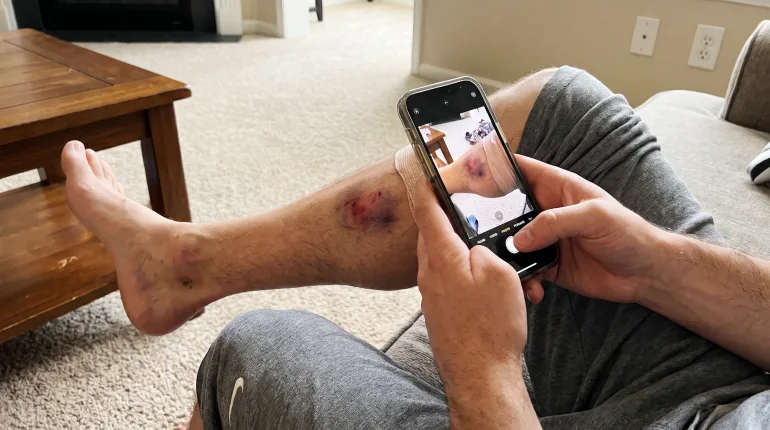
Your social media activity is not as private as you think, and insurers do look. A single post can be pulled out of context and used against you.
An innocent photo, like a smile at a family barbecue, can be twisted to suggest you are not really hurt. Even an old post or a friend tagging you in an activity can raise questions about your physical limitations.
Until your claim is resolved, the safest approach is simple: stay off social media, and ask friends and family not to post about you or tag you.
7. Accepting a Settlement Before You Reach Maximum Medical Improvement
Settling too early is one of the costliest mistakes an injured worker can make. Insurers often dangle a quick lump sum before you reach maximum medical improvement, the point at which further recovery or lasting improvement from your injury can no longer reasonably be expected, based on reasonable medical probability.
Until you reach that point, no one truly knows what your injury will cost. A settlement that looks generous today can fall far short once you account for future surgeries, ongoing therapy, or a permanent impairment that limits your ability to earn a living.
A first offer is a starting point, not a fair value. Have an attorney review any settlement before you sign, so the number reflects your future medical care and lost earning capacity, not just the bills already in your mailbox.
8. Trying to Handle a Florida Workers' Comp Claim Alone
Assuming you can manage the claim on your own is the final major mistake. The insurance carrier has adjusters and attorneys whose job is to limit what it pays, and going in without your own advocate puts you at a real disadvantage.
Deadlines are part of the reason. Under Florida Statute § 440.19, you generally have two years from the date you knew or should have known your injury was work-related to file a petition for benefits. Each benefit payment or authorized treatment can extend that window by one year from the date it was provided, but the extension does not apply to every issue, such as whether your injury is covered at all.
A workers' compensation attorney handles the paperwork, tracks the deadlines, and pushes back when the insurer denies or delays. That support is often the difference between a claim that stalls and one that delivers the benefits you need.
Your Next Step: Talk to a Board Certified Workers' Compensation Specialist
Avoiding these mistakes comes down to acting quickly, documenting everything, telling the truth, and getting guidance before you make a costly decision. In Florida's workers' compensation system, the details decide the outcome.
Michles & Booth has fought for injured workers across Northwest Florida for more than two decades. Our team even includes a medical doctor on staff to help build the strongest possible claim. We work on a contingency basis, so there are no fees unless we recover benefits for you.
If you were hurt on the job, do not leave your claim to chance. Contact us today for a free consultation.


Schedule a Free Consultation with Our Attorneys Today!
get a Free Consultation